MKWAWA UNIVERSITY COLLEGE OF EDUCATION
A constituent College of the University of Dar es Salaam
-
 Excited staff ready to support and inspire our new students!
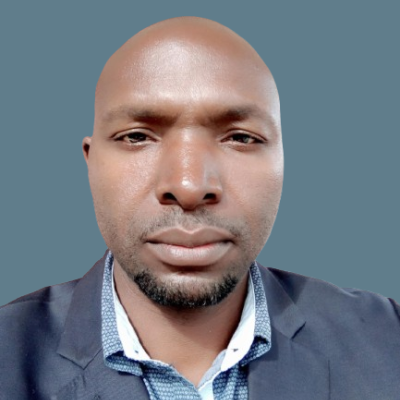
Biography
Biography
Dr. Wakati Maliva holds a PhD in Education, a Master of Arts in Education, and a Bachelor of Education in Arts. With a strong foundation in educational theory and practice, Dr. Wakati Maliva has dedicated his career to exploring the intricate relationship between language and education, focusing particularly on language education, language of instruction, and language assessment.
His research interests are rooted in the belief that language proficiency is fundamental to effective learning and teaching processes. His PhD research examined teachers’ classroom practices in assessment of English subject oral language skills, contributing valuable insights to the field and highlighting the importance of inclusivity in language practices within educational settings.
In addition to his academic pursuits, Dr. Maliva has extensive practical experience in classroom teaching, curriculum development, educational consulting, which informs his approach to research and policy development. He has worked with educators at various levels to implement effective language instruction strategies and assessment practices that cater to diverse learners.
As an advocate for evidence-based practices in education, Dr. Maliva is committed to contributing to the discourse on language education through publications, conferences, and collaborative research projects. His work aims to empower educators and policymakers with the knowledge needed to support all students in achieving linguistic proficiency and academic success.
Dr. Maliva continues to engage in research that addresses the challenges of language use in education, striving to enhance the learning experiences of students from all linguistic backgrounds. He is passionate about creating equitable educational environments where every learner has the opportunity to thrive.
For inquiries or collaboration opportunities, please feel free to contact Dr. Wakati Maliva at [mwamaliva105@hotmail.com; wakati.maliva@udsm.ac.tz and wakati.maliva@muce.ac.tz]
Contacts
Email:
Email Address
wakati.maliva@muce.ac.tz
Research Interest
Research Interest
English as foreign language, Oral language assessment, Curriculum development,
Google Scholar
Projects
Publications
Publications
Maliva, W. (2017). Teaching strategies employed by ACSE English language teachers in implementing CBLT in Tanzania. International Journal of Languages Education and Teaching vol 5(4). https://doi.org/10.18298/ijlet.2404
Kawonga, G. & Maliva, W. (2018). East African development: Language as a forgotten factor. In Cichocki, P. & Zabeck, M. Development in East Africa, Cultural shift: Developments, Biographies, (Im)materialities. Iringa, Warsaw. Mkwawa University College of Education & Institute of Ethnology and Cultural Anthropology, University of Warsaw: 31-56.
Maliva, W., Vuzo, M. & Kapinga, O. (2022). English Language Teachers’ Classroom Assessment Practices of Oral Language Skills in Secondary Schools in Tanzania. Journal of Linguistics and language in Education. Vol 16(1), 64-90
Maliva, W. (2025). English as foreign language in Tanzanian secondary schools: Teachers’ voices on what impedes classroom oral language assessment. Education: Journal of Teaching and Learning, 1(1). 21-38. https://doi.org/10.37759/ejtl.2025.1.1.2
Magidanga, F., Mwakifuna. M., Mhewa, M., Maliva, W., Kawonga, G., & Mlyahilu, J. (2025). A systematic review comparing teacher-centred and learner-centred teaching approaches in Tanzanian secondary schools. Education: Journal of Teaching and Learning, 1(1). 106-122. https://doi.org/10.37759/ejtl.2025.1.1.6